


Published by
Share


7 Key Benefits of Staff Augmentation for Software Dev
09 June 2026
Your team is talented, but they can't be experts in everything. When a project suddenly requires deep knowledge in a niche area like machine learning, advanced cloud architecture, or a specific mobile framework, the search for a full-time hire can stall your progress for months. Staff augmentation gives you a direct line to these specialists, allowing you to bypass the delay and inject the exact expertise you need, right when you need it. This ability to instantly fill skill gaps is one of the most powerful benefits of staff augmentation for software development, especially as you look to build more sophisticated, AI-powered teams. It’s about adding a specialist who can solve complex problems and accelerate your roadmap from day one.
Key Takeaways
- Think beyond temporary fixes: Use staff augmentation strategically to access specialized skills on demand, accelerate your product roadmap, and keep your core team focused on high-impact work.
- Gain flexibility and control: Quickly add specialized engineers to your team to meet deadlines and manage costs effectively. This model allows you to scale your team up or down while keeping full control over your project's direction.
- Focus on integration for success: The right partner provides more than just coders; they provide collaborators. Ensure success by choosing a partner who vets for soft skills and by implementing a clear onboarding process that aligns new engineers with your team's culture and communication style.
What Is Staff Augmentation?
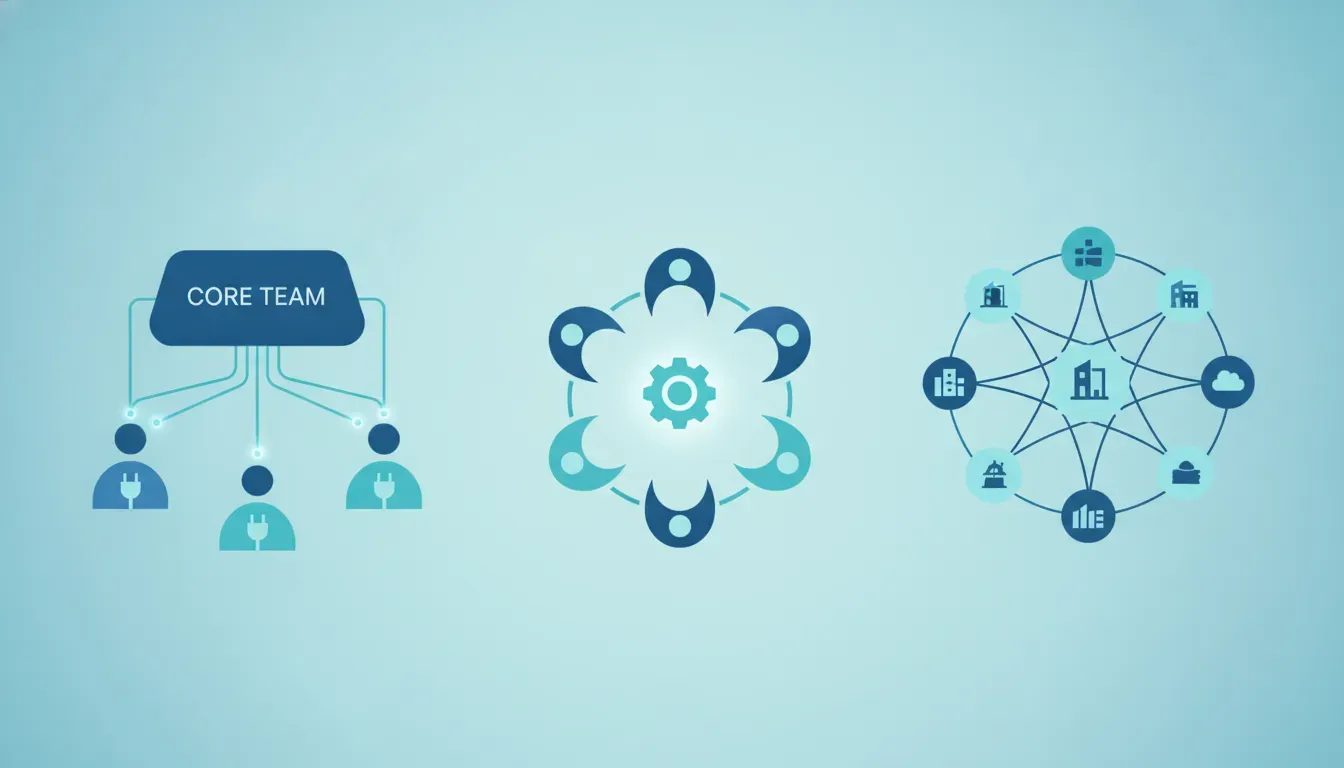
Think of staff augmentation as a way to temporarily add expert engineers directly to your team. It’s a flexible strategy for bringing in outside talent to fill specific skill gaps or provide extra horsepower for a critical project. Unlike traditional outsourcing where you hand off an entire project, these augmented team members work alongside your full-time employees, reporting to your managers and integrating into your daily workflows and culture. It’s like extending your team, but without the lengthy recruitment process and long-term commitments of hiring.
This model is designed to solve some of the most common challenges engineering leaders face, from tight deadlines to a sudden need for specialized knowledge. For instance, if your team needs to build a new feature using a framework they’ve never touched, you can bring in a senior developer who has. Teravision’s staff augmentation services are built on this principle of seamless integration, providing you with experienced engineers who can contribute from day one. By adding skilled professionals exactly when and where you need them, you can keep your projects moving forward and give your in-house team the support they need to succeed.
Staff Augmentation vs. Outsourcing and Dedicated Teams
It’s easy to group all external hiring models together, but the differences are important. The biggest distinction between staff augmentation and project outsourcing comes down to control. With outsourcing, you hand an entire project over to a third-party vendor who manages it from start to finish. With staff augmentation, you retain full control. The augmented engineers become part of your team, and you direct their work, making it a truly collaborative effort.
The line between staff augmentation and a dedicated team can feel a bit finer. A dedicated team is a group of engineers from a partner company that works exclusively on your project, but they often operate as a separate, self-managed unit. Staff augmentation focuses on integrating individuals into your existing team structure. This approach is perfect when you need to enhance your current team's capacity or skills, rather than building a separate one to run a project in parallel. It’s about building a single, cohesive team that blends your talent with ours.
When Should You Use Staff Augmentation?
Staff augmentation is a powerful tool, but it shines brightest in a few specific situations. It’s an ideal solution when you’re facing urgent project deadlines and simply don’t have enough people to get the work done on time. Instead of letting a release date slip, you can bring in a few extra engineers to accelerate development and hit your target.
It’s also the perfect move when your team runs into a technical skill gap. Let’s say your roadmap requires expertise in cloud migration, mobile development, or AI, but no one on your team has that experience. Staff augmentation allows you to instantly bring in a specialist to lead the charge and even mentor your existing team members. This model is also great for scaling your team quickly for a large project without the overhead of permanent hires, giving you the flexibility to adjust your team size as project needs change. Many of our partners have used this model to complete successful projects that would have otherwise been stalled.
Why Use Staff Augmentation? The Core Benefits
When you’re under pressure to deliver, the traditional hiring process can feel like a bottleneck. Finding, interviewing, and onboarding the right engineer takes months, but your project deadlines are measured in weeks. This is where staff augmentation becomes more than just a temporary fix; it’s a strategic approach to building a more resilient and effective engineering organization. It allows you to add skilled professionals to your team without the long-term commitments and overhead of a full-time hire.
Instead of thinking of it as just filling a seat, consider it a way to inject specific capabilities exactly when you need them. This model gives you the control to direct your projects while leveraging external talent that integrates directly into your existing workflows. For engineering leaders, this means you can meet aggressive timelines, tackle complex technical challenges, and manage your budget more effectively. It's about maintaining momentum and ensuring your core team isn't stretched thin or pulled away from its primary focus. By strategically augmenting your team, you create a more adaptable organization that can pivot quickly without the drag of traditional HR cycles. Let’s look at the core benefits that make this model so powerful.
Access Specialized Skills on Demand
Your team is talented, but no single group can be experts in everything. When a project requires deep knowledge in a niche area like machine learning, cloud architecture, or a specific programming language, the search for a full-time hire can stall your progress. Staff augmentation gives you a direct line to these specialists. You can bring in an engineer with the exact skills you need for a specific project, bypassing the long and expensive process of recruiting and training. These professionals arrive with fresh perspectives and the experience to solve complex problems, helping you build more sophisticated and AI-powered teams without the wait.
Scale Your Team Faster
Market opportunities and project demands change quickly. The ability to scale your development capacity just as fast is a significant competitive advantage. While traditional hiring can take months, a staff augmentation partner can help you add qualified engineers to your team in a matter of weeks. This speed allows you to take on new projects, accelerate your product roadmap, and respond to shifting priorities without losing momentum. Instead of putting critical work on hold while you search for talent, you can quickly expand your team to meet the challenge and scale back down just as easily when the project is complete.
Gain Flexibility to Adjust Team Size
Workloads in software development are rarely consistent. You might need extra hands for a major feature launch, a critical bug fix, or a system migration, but not for the entire year. Staff augmentation provides the flexibility to adjust your team size to match these fluctuations. For example, you can bring in a few mobile developers for a three-month push to update your iOS and Android apps, then release them once the project is done. This elasticity prevents you from over-hiring and lets you allocate your budget with precision, ensuring you have the right people at the right time. You can see how this works in our case studies with other growing companies.
Reduce Overhead and Long-Term Costs
The total cost of a full-time employee goes far beyond their salary. It includes recruitment fees, benefits, payroll taxes, equipment, and office space. Staff augmentation helps you sidestep these long-term financial commitments. You pay for the expertise you need, for the duration you need it, converting a fixed cost into a variable one. While the hourly rate for an augmented engineer might seem higher at first glance, it often results in significant savings by eliminating these associated overhead expenses. This makes your budget more predictable and allows you to invest resources back into your core product and business goals.
How Much Can You Realistically Save?
When you look at your budget, the appeal of staff augmentation is often tied to cost savings. But the savings go far beyond a simple hourly rate comparison. The true financial benefit comes from reducing or eliminating major expenses associated with recruitment, long-term overhead, and the hidden costs of inefficient team structures. By partnering with a firm, you can convert many of your fixed personnel costs into a variable expense, giving you more control over your budget while still accessing top-tier talent. Let's break down where you can expect to see the biggest impact on your bottom line.
Eliminate Recruitment and Hiring Costs
Hiring a full-time software engineer is a long and expensive process. Between recruiter fees, advertising roles, and the time your own team spends screening and interviewing, the costs add up quickly. Research suggests the process can cost tens of thousands of dollars before a new hire even writes their first line of code. This doesn't even account for the productivity lost while your team is tied up in the hiring cycle instead of focusing on product development.
With staff augmentation services, you bypass this entire ordeal. You gain immediate access to pre-vetted engineers with the exact skills you need, whether it's a specific programming language or expertise in machine learning. There’s no lengthy search or training period. You get an expert who can contribute from day one, saving you both time and direct hiring expenses.
Nearshore vs. Offshore: Balancing Cost and Quality
When you look for external talent, you’ll encounter two main models: nearshore and offshore. Offshore partners, typically located in distant countries like India or Vietnam, often promise the largest cost savings, sometimes up to 60% cheaper than hiring locally. While tempting, this model can introduce challenges with significant time zone differences, communication barriers, and cultural misalignment that can slow down projects.
Nearshore partners, located in nearby countries with similar time zones, offer a powerful balance. You can still achieve significant savings, often up to 40% compared to onshore hiring, but with the added benefit of real-time collaboration. Working with nearshore partners in Latin America, for example, means your augmented team members operate on a similar schedule, making communication seamless and integration feel natural. It’s a strategic choice that prioritizes both quality and cost-efficiency.
Lower Your Operational Overhead
A full-time employee’s cost is much more than their salary. You also have to account for benefits, payroll taxes, insurance, office space, and equipment. These operational overhead costs can add another 20% or more to your total labor expenses. When you bring on an augmented team member, these costs disappear. You pay a single, predictable rate for the services provided, and the partner firm handles all the administrative and operational burdens.
This model simplifies your accounting and makes your budget more flexible. Instead of being locked into the fixed, long-term costs of a full-time hire, you have a variable expense that you can scale up or down as project needs change. You can see real-world examples of how this helps companies manage their resources more effectively while still accelerating their development timelines.
How Staff Augmentation Accelerates Delivery
Speed is everything in software development. When you're behind schedule, the pressure mounts on your entire team, and the business looks to you for answers. Staff augmentation is a powerful strategy for accelerating your delivery timeline, not by just adding more people, but by adding the right people at the right time to break through roadblocks. It’s a targeted approach that helps you move faster and more efficiently, turning a reactive situation into a proactive one. By strategically filling critical skill gaps, reducing development bottlenecks, and enabling parallel workstreams, you can get your product into the hands of users much sooner.
This method allows you to maintain momentum without the long-term commitment or overhead of traditional hiring. Think of it as a flexible tool in your leadership toolkit, perfect for any engineering leader who is measured by their team's output and ability to deliver on time. Instead of derailing your long-term hiring strategy for a short-term need, you can surgically insert talent where it's needed most. This keeps your core team focused and your projects on track. It's about making smart, tactical decisions that have a direct and immediate impact on your product's success and your team's velocity.
Fill Critical Skill Gaps Instantly
Your team is talented, but they can't be experts in everything. When a project suddenly requires a niche skill like machine learning or advanced cybersecurity, the traditional hiring process can take months, stalling your entire roadmap. Staff augmentation lets you bypass that delay entirely. You can bring in an expert for a specific task almost immediately. These specialists don't need extensive training; they arrive ready to contribute from day one, bringing innovative solutions and fresh perspectives to your most complex challenges. This means your project keeps moving forward without losing critical momentum while you search for a new full-time hire.
Reduce Development Bottlenecks
Every engineering leader knows the pain of a development bottleneck. A single blocked task can derail an entire sprint, pushing back deadlines and frustrating the team. Adding experienced professionals through staff augmentation is one of the most effective ways to clear these logjams. By integrating seasoned engineers into your team, you can significantly shorten project timelines and improve your ability to meet deadlines. This isn't just about catching up; it's about building a more resilient development process that helps you bring products to market faster than your competitors, giving you a crucial edge.
Support Parallel Workstreams
Your core team is likely focused on the main product roadmap, but what about smaller, yet equally important, projects? Think urgent bug fixes, a quick mobile app update, or a new integration. Pulling your team off their primary tasks to handle these can disrupt focus and slow down progress on strategic goals. Staff augmentation gives you the flexibility to run multiple workstreams in parallel. You can bring in iOS or Android specialists for a short-term project without overburdening your existing staff. This allows your core team to stay focused while you continue to make progress on all fronts, ensuring no opportunity is left behind.
Beyond Cost Savings: Strategic Advantages
While reducing costs is a significant perk, the true power of staff augmentation lies in its strategic benefits. Thinking beyond the budget reveals how this model can fundamentally improve your team’s capabilities, accelerate your roadmap, and give you a competitive edge. It’s about more than just filling a seat; it’s about adding a new dimension to your engineering organization. When you partner with the right firm, you’re not just hiring developers, you’re investing in a more resilient and innovative future for your company. Let's look at the advantages that have a lasting impact on your business.
Access a Global Talent Pool
Finding a developer with niche expertise, like advanced AI or specific cloud architecture skills, can feel like searching for a needle in a haystack. Staff augmentation removes geographical barriers, giving you access to a global talent pool. Instead of competing for a handful of local experts, you can find the perfect fit for your project, no matter where they are. This allows you to bring in highly specialized engineers for critical tasks without the long, expensive recruitment cycle. You can integrate AI-ready engineers into your team in weeks, not months, and immediately start tackling complex challenges.
Drive Innovation with Fresh Perspectives
Every team can fall into a routine of "how things are done here." Bringing in an experienced engineer from the outside is one of the best ways to challenge that status quo. Augmented team members introduce new ideas, tools, and development practices learned from their work on other projects and in other industries. This fresh perspective can uncover hidden inefficiencies in your workflow and spark creative solutions to stubborn problems. By questioning assumptions and sharing different approaches, they act as a catalyst for innovation, helping your team improve processes and deliver higher-quality software faster.
Mitigate Risk During Growth and Change
The tech landscape is anything but predictable. Market demands shift, project scopes expand, and new opportunities appear overnight. Staff augmentation gives you the agility to adapt to these changes without taking on unnecessary risk. You can quickly scale your team up to meet a tight deadline or seize a market opportunity, then scale back down once the project is complete. This flexibility is invaluable for growth-stage companies where budgets are tight and long-term commitments can be risky. It allows you to manage your workforce based on actual needs, not forecasts, giving you a stable, adaptable foundation for growth.
Stay Focused on Your Core Business
Your best engineers should be working on the problems that define your company's future, not getting pulled into side projects or putting out fires. By using staff augmentation services to handle specific tasks or support existing projects, you free up your core team to focus on high-impact, strategic initiatives. This division of labor keeps your key players engaged in the work that matters most and helps prevent burnout from spreading across the team. It ensures your internal talent is dedicated to building your core product and driving long-term value, while augmented experts provide the targeted support needed to keep everything moving forward.
What Skills and Expertise to Look For
When you're looking to augment your team, you're not just hiring a temporary coder. You're looking for a partner who can integrate seamlessly and make a real impact. The right skills go beyond a specific programming language; it’s about finding a balanced mix of technical expertise, specialized knowledge, and the soft skills needed to collaborate effectively. Let's look at what that means in practice.
Core Technical Skills: Languages, Frameworks, and Cloud
Technical proficiency is non-negotiable. Your augmented engineers must be fluent in your team’s core technology stack, whether that’s .NET, React, Python, or cloud platforms like AWS and Azure. They need to hit the ground running. A key benefit of staff augmentation is the ability to get experts in these areas without a long hiring process. A good partner will have a roster of vetted professionals with proven experience, allowing you to find someone who can start contributing to your codebase and infrastructure on day one. This ensures you don't lose momentum on critical projects.
Specialized Skills: DevOps, AI, and Domain Expertise
Beyond the fundamentals, staff augmentation is a powerful way to inject specialized knowledge into your team precisely when you need it. Maybe you want to build out a machine learning feature but lack in-house AI talent, or you need a DevOps expert to streamline your deployment pipeline. Instead of spending months training your current team, you can bring in an expert who has already solved similar problems. These specialists often bring fresh ideas and new approaches that can improve your entire development process. Having access to AI-ready engineering practices can make a significant difference in bringing modern solutions to market.
Soft Skills for Seamless Team Integration
Technical skills get an engineer in the door, but soft skills determine their success on your team. Strong communication, a collaborative spirit, and a proactive mindset are just as important as coding ability. You want someone who asks smart questions, shares progress clearly, and works well with your existing engineers. When augmented staff are treated as true team members, it dramatically improves communication and reduces misunderstandings. The goal is to find people who can join existing teams and integrate so smoothly that you forget they aren't full-time employees. This cultural fit is key to a productive partnership.
How to Integrate Augmented Engineers into Your Team
Finding the right talent is just the first step. The real success of staff augmentation comes from how you bring those engineers into your existing workflow. A thoughtful integration process is what transforms a temporary contractor into a genuine extension of your team, ensuring they can contribute effectively from day one. When you treat augmented engineers as true team members, you create a cohesive unit that works together to solve problems and ship great software.
This isn't about just handing over a login and a list of tasks. It’s about intentionally building a foundation for collaboration, communication, and cultural alignment. By taking a few key steps, you can make the integration process seamless and set everyone up for success.
Set Clear Expectations and Roles from Day One
The best way to start any new working relationship is with total clarity. Before your augmented engineers write a single line of code, make sure they understand exactly what’s expected of them. This means clearly defining their role, responsibilities, and the scope of their work. Go over your security protocols, communication guidelines, and how you measure success for their projects.
Don’t leave anything to chance. Document the key contacts for different issues, the schedule for check-ins, and the deadlines they need to hit. This isn’t about micromanaging; it’s about giving them the map they need to contribute confidently. A good staff augmentation partner will help facilitate this process, ensuring roles and expectations are aligned before the engagement even begins.
Create an Effective Onboarding Process
Your onboarding process for augmented staff should be just as robust as it is for a full-time hire. A structured onboarding experience is the fastest way to get new engineers up to speed and productive. This should include providing access to all necessary systems and tools, like your code repository, project management software, and communication platforms.
Walk them through your development environment, codebase, and any important documentation. Schedule brief introductory meetings with key team members they’ll be working with. A great onboarding plan helps new engineers understand not just what they are building, but how your team builds it. This initial investment of time pays off quickly by reducing the learning curve and helping them integrate smoothly into your team’s rhythm.
Establish Clear Communication Practices
Consistent and open communication is the glue that holds a distributed team together. You can’t just assume it will happen on its own. Establish a clear communication rhythm from the start. This could include daily stand-ups via video call, dedicated Slack channels for specific projects, and regular one-on-one check-ins to discuss progress and address any roadblocks.
When working with a nearshore software development partner, take advantage of overlapping work hours to foster real-time collaboration. Encourage your in-house team to be responsive and available for questions. Using shared tools like Zoom or Google Meet for pair programming and problem-solving sessions can also make augmented engineers feel more connected and part of the core team.
Align New Members with Your Engineering Culture
Technical skill is crucial, but cultural fit is what makes a team truly click. Your augmented engineers need to understand your team’s values and way of working. Do you prioritize speed or perfection? How do you approach code reviews, testing, and feedback? Share these unwritten rules and philosophies early on.
Include your augmented team members in rituals that go beyond daily tasks. Invite them to sprint retrospectives, planning sessions, and even virtual team-building activities. When they feel like they are part of the team, not just a resource, they become more invested in the project's success. Building this sense of shared purpose is a core principle for creating high-performing, AI-powered teams that are built on trust and collaboration.
How to Prepare for Common Challenges
While staff augmentation is a powerful way to scale your team, it’s not a simple plug-and-play solution. Like any new addition to your team, integrating augmented engineers requires a bit of planning to ensure a smooth and productive experience. Getting ahead of a few common hurdles will make all the difference between a partnership that just fills seats and one that truly accelerates your roadmap. The key is to think proactively about how you’ll manage knowledge, align on work schedules, and maintain the quality your users expect.
The right partner will work with you to build a strategy for these areas from the very beginning. They won’t just provide talent; they’ll provide a framework for success. When you choose a staff augmentation partner, you should feel confident that they have proven processes for integrating their engineers seamlessly into your existing workflows. By addressing these potential challenges head-on, you can make sure your augmented team members start contributing value from day one and help you build a more resilient, capable engineering organization for the long term.
Managing Knowledge Transfer
One of the most common concerns I hear from CTOs is the fear of knowledge walking out the door when a contract ends. If you become too dependent on augmented staff without a plan for retaining their expertise, you risk creating knowledge silos that can slow you down later. The goal is to ensure that every contribution from your augmented engineers strengthens your internal team’s capabilities.
A great way to do this is by making knowledge transfer a core part of the engagement. This starts with clear documentation standards and using mixed teams, where your internal and augmented engineers work together on projects. This setup encourages organic knowledge sharing. You should also plan for a structured offboarding process that includes hand-off sessions and final documentation reviews. A proactive partner helps you build these practices into your workflow, creating AI-powered teams that continuously capture and share institutional knowledge.
Working Across Different Time Zones
Communication is the backbone of any successful development team, and a massive time zone difference can easily break it. When your team is spread across the globe, simple things like asking a quick question or holding a daily stand-up become logistical nightmares. This is why the location of your partner matters so much. While offshore teams can seem cheaper on paper, the hidden costs of communication delays and asynchronous work can quickly erase those savings.
This is where a nearshore partner makes a huge difference. By working with engineers in similar time zones, you get the significant overlap in work hours needed for real-time collaboration. Your teams can pair program, swarm on critical bugs, and participate in planning meetings together without anyone having to wake up at 3 a.m. This alignment not only improves productivity but also helps augmented engineers feel like a true part of your team. You can learn more about a partner's location and model on their about page.
Maintaining Code Quality and Consistency
Bringing new developers into an established codebase always comes with the challenge of maintaining consistent standards. You need to be sure that every line of code contributed by your augmented staff meets your quality bar and aligns with your architectural patterns. Without clear standards and oversight, you can end up with technical debt that slows down future development.
The best way to ensure consistency is through a combination of clear processes and a partner who vets for quality. Start with a robust onboarding process that covers your coding standards, development tools, and architectural guidelines. Implement regular code reviews with both internal and augmented engineers to create a feedback loop and share best practices. A high-quality partner will provide engineers who are not only technically skilled but also adaptable professionals who can quickly integrate into your existing quality assurance workflows, as shown in these case studies.
Common Myths About Staff Augmentation
Staff augmentation is a powerful strategy for scaling your engineering team, but it’s often surrounded by misconceptions. These myths can cause leaders to hesitate, preventing them from accessing a solution that could solve their most pressing challenges, from talent shortages to slow delivery cycles. Before you can decide if this model is right for you, it’s important to separate fact from fiction.
Let's clear the air and address some of the most common myths about staff augmentation. Understanding the reality of this flexible talent model will help you make a more informed decision for your team and your business goals. When you see how it truly works, you might find that it’s the key to accelerating your product roadmap in ways you hadn't considered.
Myth: It’s only for short-term needs
While staff augmentation is an excellent solution for covering short-term gaps or getting a specific project over the finish line, its benefits extend far beyond temporary assignments. Viewing it as only a quick fix overlooks its strategic, long-term value. Many companies build lasting relationships with augmented engineers, who become integral members of the core team. These professionals can contribute to your product roadmap for years, offering stability and deep institutional knowledge. A long-term staff augmentation strategy allows you to maintain momentum, adapt to changing priorities, and scale your capabilities without the constant cycle of hiring and training for every new challenge.
Myth: It replaces full-time employees
This is one of the biggest and most persistent myths. The goal of staff augmentation is to enhance your current team, not replace it. Think of it as adding a specialist to your roster. You bring in an expert to provide skills or capacity your team lacks, allowing your full-time employees to focus on what they do best. This approach empowers your team by offloading tasks that create bottlenecks or by introducing new expertise for a specific initiative, like building an AI feature. By supplementing your team with the right talent, you actually make your full-time employees more effective and your entire engineering organization more productive. You can see how this works in practice through various successful integrations.
Myth: It’s only for large enterprises
You don’t need a massive budget to make staff augmentation work. In fact, startups and mid-market companies often gain the most from this model. For a growing startup, it provides a way to scale the engineering team quickly without the heavy financial and administrative burden of full-time hires. It offers the flexibility to add senior talent for a critical growth phase and then adjust as needs change. This allows smaller companies to compete for top-tier engineers they might not otherwise be able to attract. It’s a lean, strategic way to build a powerful team and accelerate product development, which is why it’s a core part of many product and venture studio models.
How to Choose the Right Staff Augmentation Partner
Finding the right staff augmentation partner is about more than just filling an empty seat. The right partner acts as a strategic extension of your team, helping you accelerate delivery and improve your engineering practices. The wrong one can introduce friction, slow down your roadmap, and create more problems than they solve. So, how do you tell the difference?
It starts by treating the selection process with the same seriousness you would for a key full-time hire. You’re not just buying a service; you’re investing in a relationship that will directly impact your product and your team. Before you sign a contract, it’s essential to look past the sales pitch and evaluate potential partners on a few key criteria. By asking the right questions and digging into their processes, you can find a partner that truly aligns with your goals and helps you build better software, faster. To help you make the right choice, let’s walk through what really matters.
Look Beyond Technical Skills
Technical proficiency is the baseline, not the finish line. Any credible partner can find a developer with the right language and framework experience. The best partners understand that a great engineer is also a great collaborator. You need someone who can integrate smoothly with your existing team, communicate clearly, and contribute to your engineering culture, not detract from it. Ask potential partners how they screen for soft skills like communication, problem-solving, and teamwork.
A strong cultural fit is especially important for long-term engagements. When an augmented engineer shares similar work ethics and communication styles, they feel less like a contractor and more like a core part of the team. This synergy is critical as you build modern, AI-powered teams that depend on close collaboration and shared understanding to succeed.
Verify Their Screening and Onboarding Process
A partner’s internal processes are a strong indicator of the quality you can expect. Don’t be afraid to ask for details about their candidate vetting process. How do they conduct technical assessments? Do they use live coding challenges or theoretical tests? A rigorous screening process that evaluates both technical depth and practical problem-solving ability is a sign of a mature and reliable partner. A great partner will be transparent about how they find and qualify talent.
Equally important is what happens after the contract is signed. Does the partner offer support to ensure the new engineer onboards effectively? The goal of staff augmentation is to add capacity with minimal disruption. A partner who assists with integration, sets clear expectations, and maintains an open line of communication can make the difference between a seamless transition and a frustrating one.
Assess Their Speed and Flexibility
One of the primary reasons to use staff augmentation is to move faster. When you have a critical skill gap or an urgent project, you can’t afford to wait months for a partner to find the right person. During your evaluation, ask about their typical time-to-hire for the roles you need. Can they provide qualified candidates for you to review within days or weeks? A partner with a deep talent pool and an efficient recruitment engine can help you maintain momentum.
Your needs can also change. A project might require you to scale up for a few months and then scale back down. A flexible partner will allow you to adjust your team size without being locked into rigid, long-term contracts. This agility allows you to manage your budget effectively and respond to shifting business priorities without the overhead associated with traditional hiring and firing cycles.
Check Their Track Record and Industry Experience
Past performance is one of the best predictors of future success. Ask potential partners for case studies or client references, preferably from companies that are similar to yours in size, industry, or technical challenge. When you review their past work, you get a real-world look at their ability to deliver on their promises and handle complex projects. It’s a simple step that provides invaluable insight into their reliability and the quality of their engineers.
Industry experience is another significant factor. A partner who understands the nuances of your sector, whether it’s fintech, healthcare, or logistics, can provide engineers who get up to speed faster and contribute more meaningfully from day one. They’ll be familiar with common compliance, security, and user experience challenges in your domain, allowing them to add strategic value beyond just writing code.
Related Articles
- Staff Augmentation | Teravision Technologies
- Product Engineering Outsourcing | Teravision
- Data Engineering Outsourcing Services | Teravision
- AI Custom Software Development | Teravision
Frequently Asked Questions
What’s the difference between using staff augmentation and just hiring a freelancer? While hiring a freelancer can work for a small, isolated task, staff augmentation is about finding a true team member. A good partner firm does much more than connect you with a developer. They handle the intensive vetting process to ensure technical and cultural fit, manage all the administrative overhead, and help you integrate the engineer into your team for seamless collaboration. You get a reliable, high-quality professional who is ready to contribute to your long-term projects, not just a temporary hand for a single gig.
How do I prevent losing valuable knowledge when an augmented engineer's contract ends? This is a common concern, and the key is to be proactive. A solid strategy involves making knowledge sharing a part of the daily workflow from the very beginning. You can do this by pairing augmented engineers with your full-time staff on projects, maintaining clear documentation standards, and conducting regular code reviews. A planned offboarding process, which includes hand-off sessions and final documentation checks, ensures that all the expertise gained during the project stays with your team long after the contract is complete.
Will bringing in temporary engineers negatively affect my full-time team's morale? It’s a valid question, but when managed correctly, staff augmentation actually improves team morale. The goal is to enhance your team, not replace it. By bringing in specialists to handle specific tasks or clear a backlog, you relieve pressure on your full-time employees and prevent burnout. This allows your core team to focus on the strategic work they enjoy most. When you frame it as providing support and new expertise, your team will see augmented engineers as valuable allies, not threats.
The hourly rate for an augmented engineer seems higher than a full-time employee's. How does this actually save money? It’s important to look at the total cost, not just the hourly rate. The cost of a full-time employee goes far beyond their salary; it includes recruitment fees, benefits, payroll taxes, equipment, and other overhead that can add 20% or more to your expense. With staff augmentation, you pay a single, predictable rate that covers everything. You eliminate long-term financial commitments and recruitment costs, giving you a more flexible and often more cost-effective way to access the talent you need.
How long does it typically take for an augmented engineer to become a productive member of my team? A major benefit of staff augmentation is speed. Since a good partner provides pre-vetted experts, the technical learning curve is minimal. The ramp-up time to full productivity largely depends on your onboarding process. With a structured plan that provides access to tools, introduces them to key team members, and clarifies your workflows, a new engineer can start contributing meaningfully within the first week. The goal is to make them feel like part of the team from day one, which accelerates their ability to make an impact.
Related Articles


Set up a Discovery Call with us today and start working with Teravision, a company with 20+ years of experience in the software industry and Development Centers in Mexico and Colombia



Dedicated Software Teams
Augmented Teams
What's the Difference